
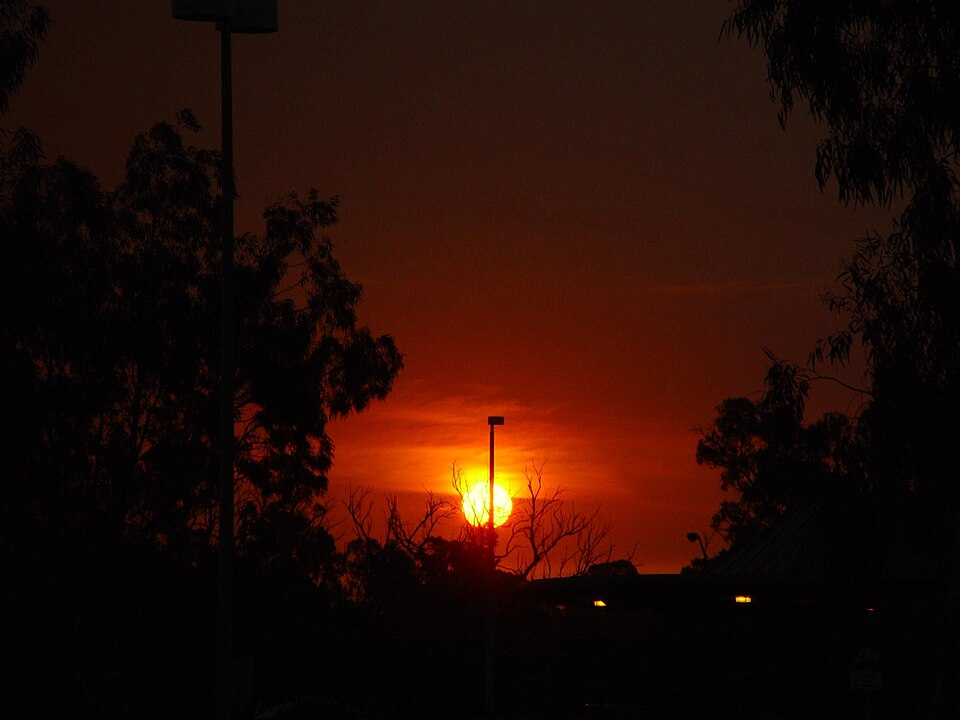
The Echo Chamber had an uncanny way of constructing scenery. It all seemed so very real, and an untrained eye might believe it to be so. The way that the grass rustled in the fabricated wind certainly seemed like reality, and the sound of birds chirping as they flew over the shimmering blue pond was convincing enough to make anyone do a double take. It was true that staring into the afternoon sun for too long would sting a person’s eyes, and that the water felt as cool and as soothing as Lake Ontario. On a first glance, it seemed indistinguishable from the real world.
The novelty of the Chamber had long since worn off for Richard Maduka. He had had countless opportunities by now to scrutinise the various scenes that the Chamber constructed, and the illusion had been broken long ago. He, of course, had been fooled at one point, along with each and every one of his predecessors, but enough time in the Chamber made him aware of the smoke and mirrors. The grass, if observed long enough, would always rustle with the same motion. The wind blew in the same direction. The birds alternated between three variations of their chirps. It was all very impressive for a first-timer. Now, Richard paid it no attention at all. He wasn’t here to observe the scenery anyway. It would all disappear when he exited the Chamber.
Richard strolled around the perimeter of the pond. On the other side, a man was sitting under a tree, scribbling away at the large notebook in his hand. He didn’t look as Richard took a seat next to him, but that was to be expected.
“The sun is dying,” Richard said. “We need a solution.”
The man didn’t respond, but Richard hadn’t expected him to. The Echo Chamber saved resources by limiting his movements and speech. The man was completely still for a moment, and then his scribbling began. His solution would be in the form of diagrams, not words.
Richard peered over the man’s shoulder as he scribbled away. Leopold Beck was his name, and he had died one hundred and forty years before Richard had been born, but not before distinguishing himself in the field of aerospace engineering. The diagrams that he drew were all foreign to Richard, but he could at least recognise the general shape of a spacecraft on the page. Beck had revolutionized space travel with his designs, and Richard hoped that this design, that Beck was sketching on the page with a level of precision and detail that transcended human skill, would be revolutionary enough to save them.
Finally, Beck tucked his pencil behind his ear and ripped the page from his notebook. Richard took it, although he knew the act was meaningless. The paper would disappear when he left the Echo Chamber, but the contents of it would be recorded on the console for him to study later. Still, he glanced over it.
“It all looks very good,” Richard said. “A spacecraft to keep humanity alive while we search for a new planet, eh?”
Beck nodded his head.
“How long, in your estimate, would it take to construct this?”
“A minimum of fourteen years.”
Richard clicked his tongue. “Fourteen? Do you have any suggestions to shorten that time? Say, under three years?”
Beck went completely still. Richard sighed, getting to his feet without waiting. He knew that when this happened, no answer would come, and he had more important things to do than sit next to the digital statue of a long-dead man. Richard brushed off the back of his pants out of habit, and then loudly said “Echo Chamber admin code two-thousand twelve, exit.”
The world faded to black, and Richard pulled his headset off. He pressed the release button, and the door to the Echo Chamber lifted open. He was back in the facility.
The whir of the machines, the faint buzzing of the fluorescent light above him, and the clacking of his fingers on the console keyboard were all familiar to him. They helped Richard ground himself back in reality after his first few times operating the Echo Chamber, and while he no longer necessarily needed the grounding, his appreciation for the cold, professional, and orderly nature of the facility never faded.
He had that in common with Guangxi Feng, the facility’s creator. But more so than that, she was a god in human form. She was a genius computer scientist of the 21st century, who pioneered advancements in machine learning. Her crowning achievement, the result of decades of work, was the facility that she meticulously designed, and the Echo Chamber that it housed.
The Echo Chamber changed the world. Vaccines were developed for diseases once thought incurable. Fossil fuels were eliminated in full, and clean energy took its place. Cities were warned before natural disasters struck. Famine and poverty were eradicated. Humanity gained access to the endless resources in space. All the greatest minds in the world were brought together by the Echo Chamber and granted the greatest gift a scientist could ask for. The ability to think forever.
Guangxi had done that. Her picture, which was kept on the wall next to the console, showed her smiling face from when the facility was first opened and she was still alive. That was centuries ago. Richard had spoken to her Echo several times before, but still he wished that he could have met this deity in the flesh.
Richard turned his attention back to the console screen. The diagrams that Beck had drawn had been scaled up and rendered as a 3D model. The spacecraft that he had designed would save humanity, but the timeline made it unfeasible. Beck estimated fourteen years, but the Echo Chamber estimated that the sun would be gone in three. The Echo Chamber’s programming had caused it to wait until the threat was three years off, and thus it neglected to mention it before in any of its daily prognosis reports. It was a flaw in an otherwise perfect system, and Richard made a note to remedy the error once this sun business had been settled.
He filed away Beck’s plans into a folder titled “UNFEASIBLE BUT INTRIGUING”. Then he sat and stared at the screen, tapping his finger mindlessly on the desk. Before him was a list of names, belonging to many of the great thinkers of the past several centuries or so. He scrolled through the list, checking off suitable names.
Thinkers born after the creation of the Echo Chamber were more reliable. There was more information recorded about them, and more details meant a more accurate reconstruction of their consciousnesses in the Chamber. But post-Chamber thinkers with worthy achievements were few and far between. The Echo Chamber could reconstruct the geniuses of the past, and allow them to think and experiment in the modern age without the burden of being alive. There was no need for new thinkers, but some still chose to pursue it out of passion. Leopold Beck was a notable example, but there were not many like him.
Eventually, Richard narrowed down the list to a couple dozen promising candidates. He would start with them, and then work backwards. He eyed the clock on the wall, sighing at the sight of 5:57 pm. He didn’t want to work late tonight, so he saved the list and logged out. On the drive home, he thought intensely about what to make for dinner, and the images of his favourite dishes circulated in his mind until his stomach growled. It was dark by the time he pulled into his driveway, and the sun seemed like a far less pressing matter.
#
Richard held his head in his hands. The light of the console illuminated the eye bags that had grown distinct over the weeks of little sleep. The plans for yet another solution that would take far too long to construct mocked him from the screen. He filed it away into “UNFEASIBLE BUT INTRIGUING”. The folder had swelled in size lately.
Richard looked to Guangxi for reassurance. Her smile from within the hanging frame made him feel at ease. Guangxi was a genius, and he was operating her miracle machine. There was a solution to be found, he just had to keep searching. Guangxi’s machine had never fallen short before. The Echo Chamber would provide.
Richard selected the next candidate from the list and settled himself into the Echo Chamber while it generated the Echo. This one was of Lucia Salgado, the chemist who founded the Moon Research Lab in the twenty-second century. It was an unorthodox choice, given that her area of expertise was not directly related to astrophysics, but all the astrophysicists Richard had spoken to thus far had provided unfeasible solutions. Besides, what was the sun if not a giant ball of chemicals? Perhaps Salgado would surprise him.
Richard put the headset on, and the world around him changed. The walls of the Chamber faded, giving way to a seemingly endless expanse. Richard was outside—or at least it looked like he was—standing on a cliff that overlooked the sea. The simulated salty air stung his nose, and the sound of the crashing waves thumped steadily in his ears. In this scene, it was nighttime. The innumerable stars shone down on the silhouette of a woman near the edge of the cliff. She was sitting on a wooden stool with a canvas before her, and she was painting the starry night.
Richard walked up behind her and coughed politely, although there was no need.
“Lucia Salgado,” he said. “The sun is dying. I need a solution.” The moment the words left his lips, Salgado’s canvas became blank, and her paintbrush began to dance across it. This time, she was painting diagrams instead of making art. Richard watched the coloured streaks snake across the canvas, but it wasn’t before long that his eyes began to glaze over. He knew little about chemistry, and besides, there was no point in watching her process. The final product was all he needed. He let her paint, and turned his gaze to the twinkling stars above him. He knew that the scenery the Echo Chamber constructed was based on the psyche of the person being called upon, and he couldn’t help but wonder what kind of scene the Chamber might make when it was his consciousness being summoned. Was it simply the scene that the consciousness found most pleasing? In that case, Richard thought that his consciousness might cause the Chamber to construct his bedroom. Richard was never more comfortable than when he was in bed. He relished those moments in the morning when he stayed under the covers until the absolute last possible minute, staring at the stucco ceiling and listening to his wife’s breathing.
Lucia’s stillness brought his attention back to the canvas. On it was a detailed plan to fuel the sun’s core with elements that would allow it to continue to burn for another few centuries. Richard studied the plans with hope, but soon realized that they too were unfeasible. The material requirements were astounding, taking far more resources than humanity had. And besides that, the amount of time it would take to construct the proper vessel would take far longer than three years.
“Echo Chamber admin code two-thousand twelve,” Richard said with a sigh. “Exit.”
#
Richard couldn’t bear to look at the console. He knew that whatever was on the screen would only frustrate him. He ran his hand through his hair and sighed. It was greasy. He couldn’t remember the last time he had taken a shower.
Each and every candidate had failed. All of their ideas were either unfeasible or would take too long. He had gone through the entire list, and crossed off the last one today. Their idea would go into the folder with all the rest. “UNFEASIBLE BUT INTRIGUING”.
Richard rubbed his tired eyes. He was at a loss. He could generate more Echoes, but he was sure that it would be fruitless. He glanced at the picture of Guangxi on the wall. It no longer brought him comfort. Looking at her made Richard’s face grow hot. Her smile, which had once mirrored Richard’s own feelings towards the Chamber, now seemed more like a sneer. She was mocking him.
He wanted to rip the picture off of the wall and throw it across the room. Instead, he stood and marched into the Echo Chamber.
“Echo Chamber admin code two-thousand twelve. Give me Guangxi.” The walls of the Chamber disappeared, and Richard was taken to a penthouse apartment. He could see the city of Toronto out the window, the cars and commuters going about their simulated lives far below him. Guangxi stood next to him, looking out at the simulated world.
“You’re not having much success, are you Richard?”
“What would you know about my success?”
“I know about everything that goes on in the wires of this machine. I know about the sun, and I know about your quest for a solution.”
“So you’ve been eavesdropping.”
“It is my machine, after all.”
“Your machine? More like your failure.”
“Failure? The Echo Chamber has changed the world for the better. I’d hardly call that a failure.”
“Yeah, well, all the good it did won’t matter soon. The world will end, and everyone will be dead, and your machine isn’t going to save us. Maybe you should have built a better one.”
“A better one? I built my machine to do exactly what I wanted it to do. And so far, it has fulfilled all of my expectations. I don’t see how I could make it any better.”
“Damn you, Guangxi! You… you’re… you’re…!”
“I’m what, Richard? What am I? Am I a god? A deity? Am I the saviour of humanity? Or am I history’s greatest failure? Because you can’t seem to decide.”
“You’re… you’re a pain in my ass right now.” Richard turned away dismissively. “This was a waste of time. Echo Chamber admin code–”
“Override.”
“Damn it, Guangxi!”
“What did you expect? This is my machine, after all. My life’s work. I built this machine to help people, you know. I didn’t create it to save them. It’s not capable of that, anyway. It can’t save humanity. All of those ideas it spit out? They wouldn’t have mattered, even if you had enough time. So what if humanity flees earth and finds a new planet to colonize? It’ll be another sun, with another time limit. There’s always a time limit, Richard. You can extend it, sure, but you can’t prevent it. Humanity will vanish one day. That much is inevitable. Don’t you think there is something else you could be doing with your time, Richard? Something more worthwhile than fighting against the course of nature.”
“Of course not,” Richard spat. “There is nothing more important than this!”
Guangxi simply sighed and shook her head. “That’s not the answer I was hoping to hear.” After a brief pause, she loudly said “Echo Chamber, initiate permanent shutdown sequence.”
“What? No! Echo Chamber admin code two-thousand twelve, override!”
“Come on now, Richard. You honestly didn’t expect that to work, did you? This is my machine, after all.”
“Guangxi, stop this! You’re… you’ll…!”
“It doesn’t matter whether you think I’m a deity or a villain. My machine has served its purpose. Goodbye, Richard.”
#
Richard pulled the comforter up to his chin. It was cold, colder than it had ever been. It wouldn’t be long now.
Richard thought he better get out of bed, but then he remembered that there was no reason for that anymore. The Echo Chamber had shut down, and besides, it was all the way back in Toronto. He was on the other side of the world, finally taking that vacation to Malaysia that he had been putting off for so long.
He heard his wife snore and nestle into his shoulder. Her breathing was slow and irregular. Richard loved it. The way the blanket weighed down on him, staving off the frigid climate outside, made him feel safe. Richard closed his eyes, letting the memory foam pillow cradle his head. He had no reason to get out of bed. He could stay there, in that moment, for as long as he wanted. He could stay there for the rest of his life.
Dylan Parkins is a twenty-four year-old student in their fourth year of studying English Literature at Trent University. Dylan loves stories, and their favourite genre to read and write in is speculative fiction.